The short version
A bank account and a payment processor solve different problems. Wise moves money you've already been sent to an IBAN. Stripe and PayPal collect money from someone who only has a card or a PayPal balance -- a client checking out on your SaaS pricing page, a customer buying a digital product, a marketplace buyer who never sees your invoice. An Estonian OÜ can open all three without a US entity, a Stripe Atlas company, or any structure beyond the one you already have (source: e-resident.gov.ee, Payment processing guidance, as of July 2026).
- Stripe and PayPal both support Estonia as a company's country of establishment -- you do not need a US LLC or Stripe Atlas to accept card payments through an Estonian OÜ.
- Wise moves invoiced payments between accounts; it does not give you a checkout page or accept a customer's credit card directly. That's what Stripe and PayPal are for.
- Card processors charge a percentage plus a fixed fee per transaction, and the exact rate depends on card origin, currency, and your processing volume -- check the current rate directly at stripe.com/pricing and paypal.com before you budget around a number.
- Wise still has no monthly fee and a one-time ~50 EUR setup for account details (as of July 2026, source: wise.com/pricing) -- it stays the cheapest way to receive an invoiced bank transfer.
- Most Estonian companies end up running two rails at once: a processor for anything a customer pays by card, Wise for anything a client pays by bank transfer against an invoice.
I've invoiced consulting clients through Wise since 2018 and only added Stripe in 2021, when I started selling a paid guide directly to readers instead of only billing hourly. The two setups solved completely different problems, and I initially tried to force everything through Wise before realizing it simply doesn't do checkout pages.
Why a bank account isn't a payment processor
Wise, Revolut, and traditional banks give your company an IBAN -- a destination for money someone else has already decided to send you, typically against an invoice. A payment processor gives you a way to collect money from someone who is deciding to pay you right now, using a card, a PayPal balance, or a digital wallet, without them ever seeing your IBAN. If your revenue comes entirely from invoiced B2B clients who pay by bank transfer, a processor is optional. The moment you sell to individual consumers, run a SaaS with self-serve signup, or list a product anywhere a buyer expects to pay by card, you need one.
The full walkthrough of Wise itself -- setup, fee structure, and how it compares to Revolut -- is in the banking setup guide. This guide picks up from there and covers the two processors that actually put a "Pay now" button in front of a customer.
Stripe: card payments for products and SaaS
Stripe is the default processor for a SaaS subscription, a digital product checkout, or any storefront built on Shopify, WooCommerce, or a custom stack -- it plugs into more billing and e-commerce tooling than any other option available to an Estonian company. You register your Estonian OÜ as the account holder, verify the company and its beneficial owner, connect a payout account, and Stripe starts routing card payments to that account on a rolling schedule.
Card processing fees are charged as a percentage of the transaction plus a small fixed fee, and Stripe publishes different rates depending on whether the card is issued in the EU or outside it, plus an additional currency-conversion fee when the card's currency doesn't match your payout currency. Because these rates are set per country and change periodically, this guide doesn't quote a number that could be stale by the time you read it -- pull the current schedule directly from stripe.com/pricing before you model your margins.
Don't budget a payment-processing fee from memory or from a blog post -- including this one. Card processing rates vary by card origin, currency, and negotiated volume, and they get revised more often than banking fees. Check stripe.com/pricing directly for the number that applies to your actual customer mix.
Stripe pays out to a connected bank account, and for most Estonian companies that means Wise: connect your Wise EUR balance as the Stripe payout destination and the money lands there on Stripe's schedule, then flows into your Xolo bookkeeping the same way any other Wise transaction does.
PayPal: reach and buyer trust, at a cost
PayPal wins on one thing Stripe doesn't offer: instant recognition. A buyer who has never heard of your company will still trust a "Pay with PayPal" button, because PayPal itself sits between them and you and offers its own buyer protection. That trust is worth the most on marketplaces, freelance platforms, and one-off consumer sales where the buyer has no other reason to trust a small foreign company.
The trade-off is cost and control. PayPal's business fees run higher than Stripe's on most transaction types, currency conversion is priced separately and less transparently, and PayPal can freeze funds during a dispute or compliance review with less warning than a bank-grade processor. As with Stripe, the exact percentage depends on your country, currency, and transaction type and changes on PayPal's own schedule -- verify the current merchant fee table at paypal.com/webapps/mpp/merchant-fees rather than relying on a fixed number here.
PayPal account freezes are the most common complaint from e-Residents who rely on it as a primary rail. A sudden spike in volume, a dispute, or an automated risk flag can lock funds for days to weeks with limited explanation. Treat PayPal as a secondary or buyer-facing option, not the account your rent depends on.
Wise: invoicing and international clients
Wise doesn't compete with Stripe or PayPal on card checkout -- it competes with your bank on moving money that's already been agreed on. A client who received your invoice and pays by bank transfer sends it to your Wise EUR account, or to a local account number in their own currency if they're paying from outside the eurozone. There's no card involved, no checkout page, and no percentage-based processing fee -- just the SEPA transfer or currency-conversion fee already covered in the banking setup guide: no monthly account fee, a one-time ~50 EUR setup for account details, and 0.4-0.6% on currency conversion (as of July 2026, source: wise.com/pricing).
Every consulting invoice I've sent since 2018 has been paid into Wise. My clients pay in USD, GBP, or EUR to a local account number in their own currency, and I convert to EUR when the rate looks reasonable. I've never paid a card-processing percentage on that revenue, because none of it ever touches a card.
My #1 Recommendation
Wise Business
No monthly fee (~€50 one-time setup)“My Estonian company's only invoicing account since 2018 -- no card fees, no checkout page, just the transfer amount minus a conversion fee I can see before I confirm it.”
Start with Wise Business— Fee-free first transferAffiliate link. I receive a commission at no extra cost to you.
Disclosure, stated plainly: Wise is an affiliate partner -- open an account through my link and I earn a commission, you get a fee-free first transfer. Stripe and PayPal are not affiliate partners here; I earn nothing whether you pick one, both, or neither. I'm recommending Wise for invoiced payments because it's been my only rail for that use case since 2018, not because it pays.
Which processor fits your business model
The right combination depends on how your customers actually pay, not on which processor is cheapest in isolation:
- Consulting, agencies, retainer work: Wise alone usually covers it. Clients pay against an invoice by bank transfer; there's no card checkout to build.
- SaaS and subscription products: Stripe, because it plugs into subscription billing, dunning, and usage-based pricing that neither Wise nor PayPal handle.
- Digital products and one-off sales to consumers: Stripe for the checkout, PayPal as a secondary option for buyers who trust it more than a card form on an unfamiliar site.
- Marketplace and freelance-platform income (Upwork, Fiverr, Amazon): the platform usually forces PayPal or its own payout rail; Wise is still where that money should land once it's out.
- E-commerce with physical goods: Stripe or PayPal for checkout, plus whatever your storefront platform natively supports -- Shopify Payments, for instance, is built on Stripe's infrastructure.
Don't set up a processor you don't need yet. If every current client pays by invoice, Wise alone is the simpler bookkeeping story. Add Stripe or PayPal when a specific sale actually requires a checkout page -- not in anticipation of one.
How the money actually flows
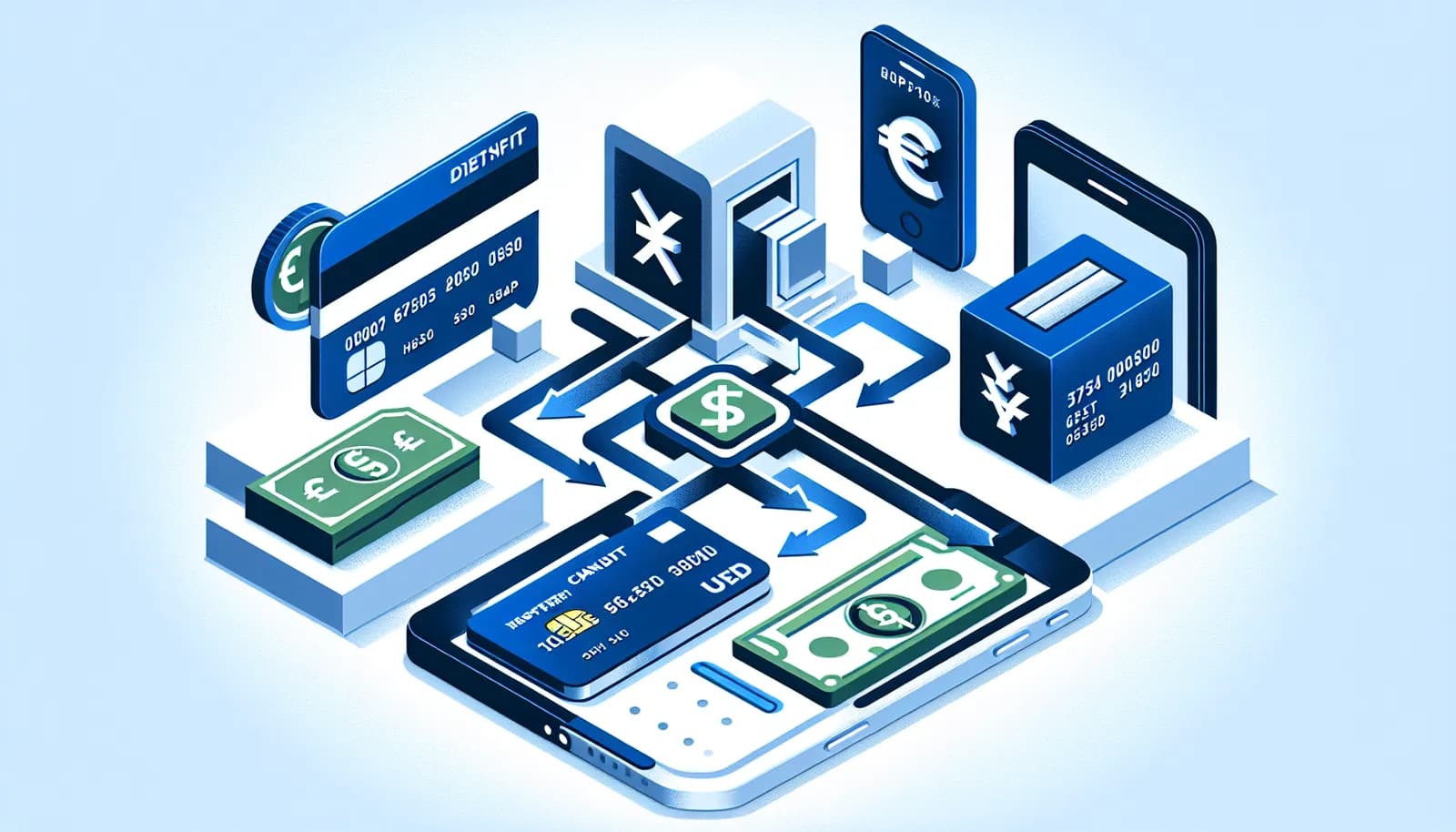
A payment that starts as a card charge in Stripe or a PayPal balance doesn't sit there -- it moves through a short chain before it becomes usable company revenue, and every link in that chain adds a delay or a fee.
- Customer pays by card (Stripe) or PayPal balance/card.
- Processor holds the funds briefly for fraud and dispute checks, then batches a payout on its own schedule.
- Payout lands in your connected bank account -- for most Estonian companies, that's the Wise EUR balance, because it's already the account your service provider syncs.
- Currency conversion happens, if the customer paid in a currency other than your payout currency, either inside the processor or inside Wise depending on where you set the account up.
- Your service provider's bookkeeping software (Xolo, for most e-Residents) pulls the Wise transaction automatically; Stripe and PayPal transactions typically need a separate export or integration, because the automatic sync that works for Wise doesn't extend to every processor.
Don't assume Stripe or PayPal transactions show up in your bookkeeping the same way Wise ones do. Check with your service provider which processors they can pull data from directly, and export the rest manually each month -- a gap here is exactly what turns into a scramble at annual report time.
VAT and invoicing when a processor collects the payment
Using Stripe or PayPal doesn't change your VAT obligations -- it changes who's technically collecting the money, not who owes the tax. If you're selling digital products or services to EU consumers and you've crossed the EUR 10,000 combined threshold, you still owe OSS VAT on those sales regardless of whether the customer paid by card through Stripe or by bank transfer through Wise. The EU VAT & OSS guide covers the thresholds and quarterly filing in full; the only thing that changes here is that Stripe and most checkout platforms can calculate and display the correct VAT rate at checkout automatically, which a manually sent invoice through Wise cannot do on its own.
You still need to issue a proper invoice for every sale regardless of how it was paid -- a Stripe receipt or a PayPal payment confirmation is not the same document as a compliant Estonian invoice, and your annual report needs the latter.
Common mistakes
- Trying to run a checkout page through Wise. Wise has no card-acceptance product. If a customer needs to pay by card without an invoice first, you need Stripe or PayPal, not a workaround.
- Assuming a percentage fee from memory. Card-processing rates change by country and card type more often than banking fees do. Check the current number before pricing a product around it.
- Treating PayPal as your only rail. Its account-freeze risk is real enough that relying on it for rent-critical revenue is a mistake several e-Residents have made once.
- Letting processor payouts sit unsynced. If your service provider can't pull Stripe or PayPal data automatically, export it monthly. Reconstructing three months of processor transactions at annual-report time is expensive and avoidable.
- Forgetting the invoice. A payment confirmation from Stripe or PayPal isn't an invoice. Issue one for every sale, card-paid or not.
What it costs
| Rail | Monthly fee | Per-transaction cost | Best for |
|---|---|---|---|
| Wise | Free | SEPA transfer free; 0.4-0.6% on currency conversion (as of July 2026, source: wise.com/pricing) | Invoiced B2B payments, international clients |
| Stripe | Free | Percentage + fixed fee, varies by card origin/currency -- check stripe.com/pricing | SaaS, subscriptions, digital-product checkout |
| PayPal | Free | Percentage + fixed fee, generally higher than Stripe -- check paypal.com/webapps/mpp/merchant-fees | Consumer trust, marketplace and platform payouts |
Most Estonian companies run Wise plus one processor, not all three. Adding a processor you don't use yet only adds an unsynced account to reconcile.
Frequently asked questions
Can I accept Stripe payments with an Estonian OÜ without a US company?
Yes. Stripe supports Estonia directly as a company's country of establishment. You don't need a Delaware company, an LLC, or Stripe Atlas -- those solve a different, US-specific incorporation problem, not a payment-processing requirement (source: e-resident.gov.ee, Payment processing guidance, as of July 2026).
What's the actual fee difference between Stripe and PayPal?
Both charge a percentage plus a fixed fee per transaction, and PayPal's rate generally runs higher, especially on cross-border and currency-converted payments. The exact numbers vary by country and change periodically on both sides -- check stripe.com/pricing and paypal.com/webapps/mpp/merchant-fees for the current schedule rather than a fixed figure.
Do I need Stripe or PayPal if all my clients pay by invoice?
No. If every client pays against an invoice by bank transfer, Wise covers that entirely with no card-processing fee at all. Add a processor only once a specific sale actually requires a card checkout.
Does Xolo sync Stripe and PayPal transactions automatically?
Wise transactions sync automatically with Xolo. Stripe and PayPal typically require a separate export or a dedicated integration -- confirm with your service provider which processors they pull automatically before assuming the same automation applies.
Do I still owe EU VAT if a customer pays by card through Stripe?
Yes. VAT obligations depend on what you sold and to whom, not on how the customer paid. Digital or physical B2C sales to EU consumers above the EUR 10,000 combined threshold still trigger OSS VAT registration regardless of payment method -- see the EU VAT & OSS guide for the full threshold and filing rules.
Continue reading
- Banking for Your Estonian Company -- Wise and Revolut in full, including fee tables
- EU VAT & OSS for Estonian Companies -- What changes once a processor collects payment from consumers
- Sending Your First Invoice -- What has to be on an invoice regardless of how it's paid
- e-Residency for SaaS Founders -- Where Stripe subscription billing fits into a one-person company
- e-Residency for E-commerce -- Checkout and payout considerations for physical-goods sellers